
Drone Surveying in Australia: Methods, Outputs and Limits
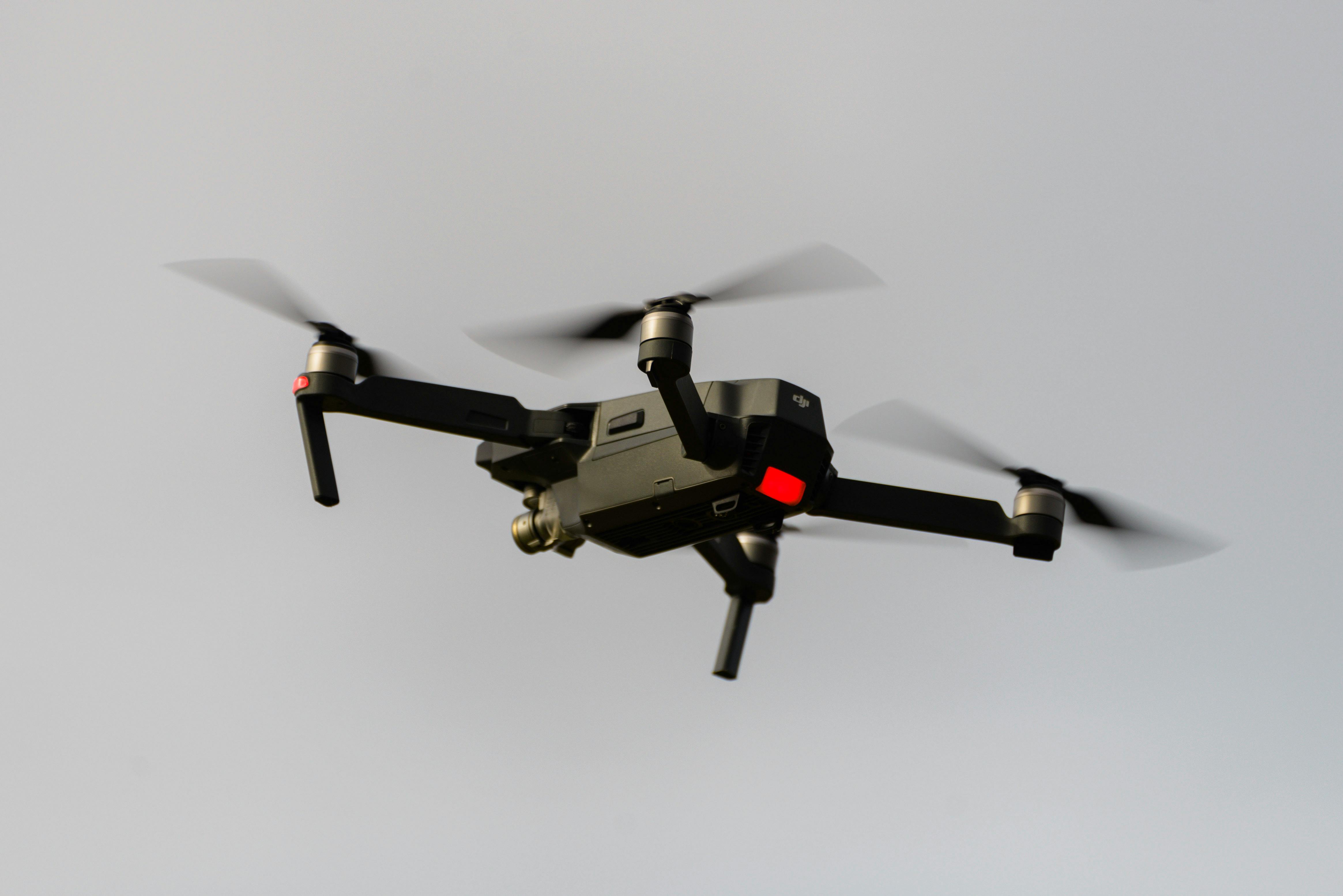
Drone surveying uses an uncrewed aircraft to collect photographs or LiDAR measurements across a site. A professional surveyor can turn that capture into an orthomosaic, point cloud, terrain model, contours or volume report for construction, engineering and infrastructure work.
The short answer: drone surveying is useful when a project needs broad coverage, repeat observations or access to ground that is difficult to reach safely. The right method depends on the decision the data must support, the required tolerance, surface visibility, airspace and the project specification. A drone does not replace total station or GNSS work where the task needs tighter control or direct measurement of specific features.
If you are preparing a scope, see our drone surveying services, drone 3D mapping in Brisbane and drone surveying in Perth pages. Boundary and title matters need the appropriate cadastral service and sit outside this commercial and engineering guide.
What a drone survey can produce
The aircraft collects raw data. The useful product comes from the survey control, processing, interpretation and checks applied to it.
| Deliverable | What it shows | Common project use |
|---|---|---|
| Orthomosaic | A georeferenced aerial image corrected to a consistent scale | Existing conditions, progress records and plan overlays |
| Point cloud | A dense set of measured three-dimensional points | Design coordination, feature extraction and 3D review |
| Digital surface model (DSM) | The visible surface, including vegetation, structures and stockpiles | Site context, progress and surface analysis |
| Digital terrain model (DTM) | A model intended to represent ground after classification | Terrain, drainage and preliminary design |
| Contours and breaklines | Interpreted levels and changes in grade | Civil design and earthworks planning |
| Volume report | A comparison between an agreed upper surface and base surface | Stockpiles, cut and fill, borrow areas and progress quantities |
The brief should name the required deliverables and file formats. A request for “drone data” alone does not tell the surveyor whether the design team needs CAD linework, a classified point cloud, a terrain surface, imagery or a calculation report.
How drone surveying works
- Define the purpose. Confirm the decision, tolerance, coordinate system, features, exclusions, deliverables and acceptance criteria.
- Review the site and flight constraints. Check access, terrain, vegetation, nearby people and assets, airspace, weather and the operating approvals needed for the proposed flight.
- Plan survey control and checks. Establish or verify control suitable for the project and keep independent check points separate from points used to fit the model.
- Capture the site. Fly an image or LiDAR pattern designed for the sensor, ground conditions and required coverage. Ground observations may be added for obscured or critical features.
- Process and classify the data. Align the capture to the project control, remove noise, classify surfaces and extract the specified products.
- Review and report. Compare the model with checks, inspect gaps and artefacts, document assumptions and issue the agreed files.
Australian drone operations must follow the Civil Aviation Safety Authority drone rules that apply to the aircraft, operation and location. Airspace approval and operational restrictions are separate from survey accuracy, so both need to be addressed in planning. Our guide to surveyor oversight and CASA requirements explains that distinction.
Photogrammetry or LiDAR?
Photogrammetry reconstructs three-dimensional surfaces from overlapping photographs. It works well when the surface is visible, has usable texture and can be captured with consistent image coverage. It also provides the imagery used to create an orthomosaic.
LiDAR measures ranges from the sensor and can record returns through some vegetation gaps. It can be more useful for corridors, rough ground or areas where the bare-earth surface is partly obscured. It still needs appropriate control, classification and ground checks; “LiDAR” does not automatically mean that every hidden surface has been measured.
| Site condition or need | Likely starting point | What to confirm |
|---|---|---|
| Open earthworks or stockpiles | Photogrammetry | Surface visibility, boundaries, base surface and repeatability |
| Vegetated terrain or long corridor | LiDAR, often with ground survey | Canopy density, required ground features and classification checks |
| Visual record plus measured surface | Photogrammetry or a combined capture | Image resolution, privacy, obstructions and survey checks |
| Tight set-out or critical hard features | Ground survey, with drone context if useful | Project tolerance, direct observations and required sign-off |
What determines accuracy?
There is no single accuracy figure that applies to every drone survey. The achievable result depends on the required product, flying height, sensor, image quality, site geometry, survey control, independent checks, vegetation, shadows, moving equipment, reflective or uniform surfaces and the way the model is processed.
Accuracy should be agreed against the project purpose and reported for the delivered dataset. A surface used to show general progress has a different risk profile from a quantity used in a payment claim or a model passed to a designer. Where the decision is sensitive, the scope should state the checks, reporting and ground observations required.
For a broader comparison of instruments and tolerances, read our survey accuracy and tolerances guide.
Where drone surveying fits on projects
Construction and civil works
Drone capture can document existing conditions, broad earthworks surfaces, stockpiles and visible progress. Total station, GNSS or levelling observations remain appropriate for set-out, drainage inverts, structural elements and other features that need direct measurement.
Mining, quarries and material yards
Repeat surveys can support stockpile and surface comparisons when the base surface, calculation boundary, material movements and survey dates are controlled. Queensland TMR’s Surveying Standards Part 2 illustrates this need by requiring an agreed, compatible base surface and a report that identifies the datum, control and calculation surfaces for its volume surveys. Those are TMR-specific requirements, but the comparison principle is useful more broadly. Two reports are not directly comparable merely because they show the same stockpile name.
Roads, rail and linear infrastructure
Aerial methods can capture broad corridor context, batters and accessible terrain. The asset owner controls access, safety arrangements and deliverable standards. Rail corridor access must be confirmed with the relevant owner before fieldwork or flight planning; rules differ between networks.
Renewable energy
Broad terrain capture can support route, drainage and site planning for wind and solar projects. Our renewable energy survey guide explains the survey inputs across design, construction and handover.
Limits to account for in the scope
- Dense vegetation may prevent a reliable ground surface from being derived.
- Water, glass, repetitive textures and deep shadow can create gaps or artefacts.
- Buildings, cranes, traffic and active plant can obstruct or change the surface during capture.
- Airspace or site restrictions can change the proposed method or timing.
- A visible surface model does not prove the position of buried, hidden or inaccessible features.
- A repeat survey can misstate change if its datum, control, boundary, classification or base surface differs from the earlier survey.
Briefing checklist
Before requesting a drone survey, confirm:
- What decision will the data support?
- Which site limits and features must be captured?
- What tolerance and project standard apply?
- Which coordinate system and vertical datum must be used?
- What files will the engineer, contractor or asset owner accept?
- Are control marks available and have they been verified?
- Which surfaces or features need ground observations?
- Are there access, airspace, privacy or operational constraints?
- For repeat work, what must remain consistent between surveys?
- Who will review and accept the deliverables?
Common questions
Is drone surveying suitable for every site?
No. It is strongest where aerial capture can see or measure the required surface and the site can be flown lawfully and safely. Confined areas, hidden features, dense vegetation and work with tight feature-specific tolerances may need ground methods or a combined workflow.
Can drone surveying measure stockpile volumes?
Yes, when the scope defines the stockpile boundary, base surface, survey date, control and reporting assumptions. These inputs matter because a different base or boundary can change the calculated volume even when the captured top surface is similar.
Does RTK or PPK remove the need for ground checks?
No. Position corrections can strengthen the aircraft trajectory, but independent checks are still needed to test the delivered model. The check design should match the site, method, deliverable and project risk.
What should I send with an enquiry?
Send the site location and extent, purpose, required features, project coordinate system, relevant specification, preferred outputs and any known access or flight constraints. If the work repeats an earlier survey, include the previous surface, control information, boundary and report assumptions.
Ready to scope a commercial, construction or engineering project? Contact HR Surveyors with the site extent, required outputs and the decision the survey must support.
Primary sources
- Civil Aviation Safety Authority, Drone rules, accessed 15 September 2026.
- Queensland Department of Transport and Main Roads, TMR Surveying Standards: Part 2 — Geomatic Survey Types, section 6.5, accessed 15 September 2026.
Photo credit: Photo by Bryce Carithers on Pexels